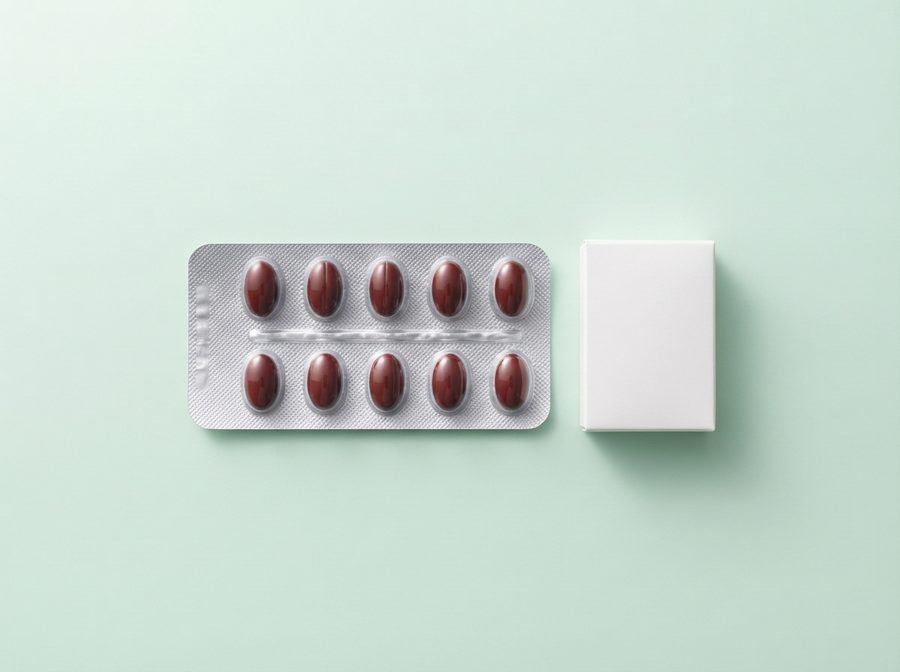
Order terms for private label iron
- Ready-made formula
- From 100 units in stock packaging, production from 2 weeks
- Your own formula
- From 500 bottles per product, production from 4 weeks
- Blister run
- From 2,000 cartons printed for your brand, at least 4,000 blisters, production from 2 weeks; 1 to 4 blisters per carton
- Sample
- A sample of the existing product before the run
- With every batch
- Certificate of Analysis and specification; shelf life 24 months
- Carton and label
- Laid out for the country of sale, in Arabic, French or English; batch number, production date and expiry date printed on the carton
- Export documents
- Certificate of Free Sale, Certificate of Manufacture, apostille and consular legalisation where the country of sale asks for them; halal certification for each batch when the market asks
- Plant
- ISO 22000, GMP and HACCP certified by BM Certification; FDA registered; reply within 24 hours, Monday to Friday
Details: minimum order quantity · lead times · export documents · halal supplements · blister films · tablets in blisters · capsules in blisters · Arabic and French packaging · Middle East · Africa · all private label supplements
Which iron supplement formulas can I put under my own brand?
Four iron formulas are on the HYPERPHARM list. Two are tablets: 27 mg of iron as ferrous bisglycinate in a six-nutrient tablet, and 15 mg as ferrous fumarate with vitamin C, B vitamins, copper and biotin. Two are capsules: 25 mg of iron from citrate and 20 mg sourced from bisglycinate. Names and strengths below are those of the list.
| Formula | Main amounts as stated | Form | Note |
|---|---|---|---|
| Iron (Ferrous Bisglycinate) 27mg Complex (10mg Zinc, 2.5mcg Vit. B12, 1.8mg Vit. B6, 500mcg Copper, 400mcg Folic Acid) tablets | Iron 27 mg as ferrous bisglycinate; zinc 10 mg; vitamin B12 2.5 mcg; vitamin B6 1.8 mg; copper 500 mcg; folic acid 400 mcg | Tablet | Multi-ingredient tablet; size confirmed on the sample |
| Iron (Ferrous Fumarate) 15mg with vitamins and minerals (Vit. C, B5, B3, B6, B1, Copper, B2, Folic Acid, Biotin B12) tablets | Iron 15 mg as ferrous fumarate; further vitamins and minerals as listed in the name | Tablet | Also on the ready-made list as "Iron with vit. & min. tablets"; per-ingredient amounts in the full composition |
| Iron 25mg (from Citrate) capsules | Iron 25 mg from citrate | Capsule | Capsule size confirmed on the sample |
| Iron 20mg (source Bisglycinate) capsules | Iron 20 mg, source bisglycinate | Capsule | Capsule size confirmed on the sample |
The 27 mg bisglycinate tablet is the most detailed of the four. Calculated per tablet against their EU reference values (Annex XIII to Regulation (EU) No 1169/2011), its companions are: zinc 10 mg at 100%, copper 500 µg at 50%, vitamin B12 2.5 µg at 100%, vitamin B6 1.8 mg at 128.6% and folic acid 400 µg at 200%. The fumarate tablet names its companions in the formula name: vitamins C, B5, B3, B6, B1, B2, copper, folic acid and biotin B12.
Which iron forms are allowed in EU food supplements?
Both iron forms in the HYPERPHARM tablets are permitted, and so are two citrates. Annex II to Directive 2002/46/EC, the list of permitted sources, in its consolidated text of 26 November 2025, names nineteen iron sources for food supplements, and Annex I has iron declared in milligrams. In the order of the Annex, the nineteen are: ferrous carbonate, ferrous citrate, ferric ammonium citrate, ferrous gluconate, ferrous fumarate, ferric sodium diphosphate, ferrous lactate, ferrous sulphate, ferric diphosphate (ferric pyrophosphate), ferric saccharate, elemental iron (carbonyl, electrolytic and hydrogen reduced), ferrous bisglycinate, ferrous L-pidolate, ferrous phosphate, ferrous ammonium phosphate, ferric sodium EDTA, iron hydroxide adipate tartrate (nano), iron milk caseinate and iron (II) taurate.
Two of the nineteen carry a footnote tying them to the Union list of novel foods, the EU list of ingredients that need their own authorisation. Their authorising acts set conditions of use:
| Source | Act | Conditions for food supplements |
|---|---|---|
| Iron hydroxide adipate tartrate (nano) | Implementing Regulation (EU) 2022/1373; added to Annex II by Regulation (EU) 2024/248 | Capsules only; adults up to 100 mg a day (up to 30 mg Fe a day); under 18 years, excluding children under 4, up to 50 mg a day (up to 14 mg Fe a day); labelled "iron hydroxide adipate tartrate (nano)" |
| Iron milk caseinate | Implementing Regulation (EU) 2023/949; added to Annex II by Regulation (EU) 2024/1821 | Adults, 700 mg a day (up to 14 mg Fe a day); two label statements: not for children under 3 years, and not on a day when other foods containing iron milk caseinate or other foods with added iron are consumed |
The two citrate entries are ferrous citrate and ferric ammonium citrate. For ferric ammonium citrate, a complex salt of undetermined structure, the specification of JECFA, the FAO and WHO expert committee on food additives, sets 16.5 to 22.5% iron for the brown salt and 14.5 to 16.0% for the green. An iron formula on a source other than the bisglycinate, fumarate and citrate of our list is quoted as a formula of your own; name the source in the enquiry.
Iron bisglycinate vs ferrous fumarate vs ferrous sulphate: how much salt gives 27 mg of iron?
For 27 mg of iron you need, calculated for the pure compound, 98.6 mg of anhydrous ferrous bisglycinate, 82.1 mg of ferrous fumarate or 73.4 mg of anhydrous ferrous sulphate, against 215.7 mg of anhydrous ferrous gluconate. The label states the iron, so the salt mass follows from the iron share of the form: 27.38% for anhydrous bisglycinate, 32.87% for fumarate, 12.52% for anhydrous gluconate.
| Form | Formula, molar mass | Iron by mass | Salt for 15 mg Fe | Salt for 20 mg Fe | Salt for 25 mg Fe | Salt for 27 mg Fe |
|---|---|---|---|---|---|---|
| Ferrous bisglycinate, anhydrous | C4H8FeN2O4, 203.96 | 27.38% | 54.8 mg | 73.0 mg | 91.3 mg | 98.6 mg |
| Ferrous bisglycinate monohydrate | C4H8FeN2O4·H2O, 221.98 | 25.16% | 59.6 mg | 79.5 mg | 99.4 mg | 107.3 mg |
| Ferrous fumarate | FeC4H2O4, 169.90 | 32.87% | 45.6 mg | 60.8 mg | 76.1 mg | 82.1 mg |
| Ferrous sulphate, anhydrous | FeSO4, 151.90 | 36.76% | 40.8 mg | 54.4 mg | 68.0 mg | 73.4 mg |
| Ferrous sulphate monohydrate (dried) | FeSO4·H2O, 169.92 | 32.87% | 45.6 mg | 60.9 mg | 76.1 mg | 82.2 mg |
| Ferrous sulphate heptahydrate | FeSO4·7H2O, 278.01 | 20.09% | 74.7 mg | 99.6 mg | 124.5 mg | 134.4 mg |
| Ferrous gluconate, anhydrous | C12H22FeO14, 446.14 | 12.52% | 119.8 mg | 159.8 mg | 199.7 mg | 215.7 mg |
| Ferrous gluconate dihydrate | C12H22FeO14·2H2O, 482.17 | 11.58% | 129.5 mg | 172.7 mg | 215.9 mg | 233.1 mg |
| Ferrous citrate, 1:1 anhydrous (composition varies) | FeC6H6O7, 245.95 | 22.71% | 66.1 mg | 88.1 mg | 110.1 mg | 118.9 mg |
| Ferrous lactate, anhydrous | C6H10FeO6, 233.98 | 23.87% | 62.8 mg | 83.8 mg | 104.7 mg | 113.1 mg |
| Ferrous lactate dihydrate | C6H10FeO6·2H2O, 270.01 | 20.68% | 72.5 mg | 96.7 mg | 120.9 mg | 130.5 mg |
| Ferrous lactate trihydrate | C6H10FeO6·3H2O, 288.03 | 19.39% | 77.4 mg | 103.2 mg | 128.9 mg | 139.3 mg |
The shares follow from the atomic weight of iron, 55.845 (CIAAW, the commission that publishes atomic weights), divided by the molar mass of each compound. Fumarate and sulphate monohydrate land on the same 32.87%; their salt weights differ in the last digit because the molar masses differ by 0.02. Ferrous sulphate shows how far hydration moves the salt mass: 73.4 mg anhydrous, 82.2 mg as the monohydrate and 134.4 mg as the heptahydrate for the same 27 mg of iron. The citrate row takes a 1:1 salt; real ferrous citrate varies in composition, so its figure is indicative.
Ferrous bisglycinate and ferrous fumarate raw material: what do the specifications say?
The grade of raw material changes how much goes into your tablet. Ferrous bisglycinate is available as a raw material processed with citric acid. The specification of 2003 from JECFA, the FAO and WHO expert committee on food additives, titled "ferrous glycinate (processed with citric acid)" with ferrous bisglycinate as a synonym, sets 21.6 to 23.0% iron (II) on the dried basis, total iron 19 to 24%, ferric iron up to 4% and citric acid up to 19.5%.
The same specification allows up to 9% loss on drying and describes the substance as "highly hygroscopic" and "A free-flowing, grey green, hygroscopic, fine powder." Its iron (II) assay sits under the 27.38% of the pure anhydrous salt in the table above, so a citric acid processed grade takes more raw material for 27 mg of iron than the calculated 98.6 mg.
The US specification for ferrous fumarate, 21 CFR 172.350, gives a minimum of 31.3% total iron and not more than 2% ferric iron for the raw material. A peer-reviewed study of direct compression tablets (Indian Journal of Science and Technology, 2010) describes it as having "poor flow properties".
Ferric iron is the oxidised form of iron (II), and both specifications cap it: 4% on the dried basis for processed bisglycinate, 2% for fumarate.
Dried ferrous sulphate is described differently: JECFA gives a material made primarily of the monohydrate with smaller amounts of the tetrahydrate, at 86 to 89% FeSO4, which works out to 31.6 to 32.7% iron.
Film choices for iron tablets and capsules in blisters are on blister films.
How is iron declared on a supplement label, and what %NRV do 15 to 27 mg print?
As elemental iron in milligrams per daily portion, with the percentage of the 14 mg nutrient reference value beside it. Calculated against 14 mg, the iron amounts on our list correspond to 107.1% for 15 mg, 142.9% for 20 mg, 178.6% for 25 mg and 192.9% for 27 mg.
| Iron as listed | % NRV | Formula on the list |
|---|---|---|
| 15 mg | 107.1% | Iron (Ferrous Fumarate) 15mg with vitamins and minerals tablets |
| 20 mg | 142.9% | Iron 20mg (source Bisglycinate) capsules |
| 25 mg | 178.6% | Iron 25mg (from Citrate) capsules |
| 27 mg | 192.9% (calculated against 14 mg) | Iron (Ferrous Bisglycinate) 27mg Complex tablets |
Article 8(1) of Directive 2002/46/EC ties the units to Annex I, where the entry reads "Iron (mg)", and Article 8 asks for the amount per daily portion recommended on the label, expressed also as a percentage of the reference value. The 14 mg comes from Annex XIII, Part A, of Regulation (EU) No 1169/2011. The figure is iron itself: 27 mg on the carton, whether 98.6 mg of pure bisglycinate or a larger weight of processed raw material stands behind it.
Your iron carton is sold under the name "food supplement" (Article 6(1)). Article 6(3) then asks for five items. For the 27 mg tablet, (a) the nutrients that characterise the product are iron, zinc, copper, vitamin B6, vitamin B12 and folic acid. The other four are (b) the portion recommended for daily consumption, (c) a warning not to exceed the stated recommended daily dose, (d) a statement that food supplements should not be used as a substitute for a varied diet and (e) a statement that the product should be stored out of the reach of young children.
In Germany the Federal Institute for Risk Assessment (BfR) also recommends a warning label on iron-containing food supplements, naming the adult groups who should take iron only after medical consultation (recommendation of 15 March 2021).
What is the maximum iron in a supplement in Dubai, Lebanon and the EU?
Dubai's health supplement guideline gives 45 mg of iron a day for ages 14 to 18, men and women. The Lebanese Ministry of Public Health's Upper Safety Level List (Annex 1, undated) gives 45 mg of iron for ages 14 and over and 40 mg up to 13 years. The EU sets no common maximum; the 2024 opinion of the European Food Safety Authority (EFSA) gives a safe level of intake of 40 mg a day from all sources.
| Market or body | Value | Document and date | Status | What it means for an iron formula |
|---|---|---|---|---|
| Dubai (UAE), Dubai Municipality | 45 mg a day for 14 to 18 years, men and women; 40 mg a day for 1 to 13 years; 20 mg a day for 0 to 12 months | Technical Guidelines for Health Supplements, DM-HSD-GU29-TGHS2, version 2.0, 4 May 2024, Annex 1, page 22 | Mineral upper limit table of the guideline | A reference figure for iron in health supplements |
| Lebanon, Ministry of Public Health | 45 mg for ages 14 and over; 40 mg up to 13 years | Upper Safety Level List (Annex 1), undated | Upper safety level list for food supplements | A reference figure for iron in food supplements |
| EU, Directive 2002/46/EC | No common maximum set | Article 5; Council of the EU note ST 15839/25, 10 December 2025 | Article 5 provides for maximum amounts | Each market applies its own provision |
| EFSA | Safe level of intake of 40 mg a day for adults, from all sources; no tolerable upper intake level established | Scientific opinion on the tolerable upper intake level for iron, EFSA Journal 2024;22(6):8819, adopted 30 April 2024 | Safe level of intake for total intake from diet, fortified foods and supplements | A reference figure for intake from all sources, used in the importer's assessment |
| Germany, BfR | 6 mg per daily portion of a single food supplement | Proposed maximum levels for the addition of iron to foods including food supplements, annex chapter to BfR Opinion No 009/2021 of 15 March 2021 | Recommendation, not a binding limit | Your importer confirms the limit for the country of sale; the dose on the carton follows your enquiry. |
| Germany, BfR, label | Warning label on iron-containing food supplements | Same BfR document, 15 March 2021 | Recommendation | Label text naming the adult groups who should take iron only after medical consultation |
The Dubai and Lebanese documents leave open whether the figure is elemental iron or the compound. The EFSA figure covers iron from food, fortified foods and supplements together; the 2004 opinion of EFSA's NDA Panel had already found the data insufficient for an upper level.
What do 15 to 27 mg of iron mean for the size and testing of a tablet or capsule?
Calculated for the pure salts in the table above, the iron source alone runs from 45.6 mg (15 mg of iron as fumarate) to 110.1 mg (25 mg as a 1:1 ferrous citrate), before companions and excipients. If the iron in the 27 mg tablet is supplied as pure anhydrous bisglycinate, the salt is 98.6 mg, beside zinc, copper, two B vitamins and folic acid; the finished weight is set on the sample.
European Pharmacopoeia (Ph. Eur.) chapter 2.9.40 replaces the mass variation test, which only weighs the units, with content uniformity, which tests the active content of each unit, when a unit contains less than 25 mg of an active substance, or when the active substance makes up less than 25% of the unit mass. For the iron, if it is supplied as the salts in the table above (the 25 mg from citrate counted as ferrous citrate 1:1), each of the four formulas reaches 25 mg or more of salt. The test then follows the iron's share of the finished unit: 25% or more allows mass variation, less calls for content uniformity. In the 27 mg tablet, zinc at 10 mg, vitamin B12 at 2.5 µg, folic acid at 400 µg, copper at 500 µg and vitamin B6 at 1.8 mg are each less than 25 mg, and for them the chapter's method is content uniformity. The chapter is a pharmacopoeial method and sets no requirement for food supplements.
The tooling sizes on the blister line: ovals of 22 × 10, 20 × 9.5 and 16 × 8 mm; rounds of 13, 12 and 11 mm; capsules in sizes 0 long, 0 and 00. An iron tablet that finishes outside them gets its own forming set, the tool that shapes the blister pocket, made or bought for it, with the lead time confirmed in our reply.
Do the iron tablets and capsules on the list suit a blister?
All four do: the 27 mg bisglycinate tablet, the 15 mg fumarate tablet and the capsules with 25 mg and 20 mg of iron. The capsule size is confirmed on the sample, and a tablet outside the usual sizes gets a forming set of its own. A blister run starts from 2,000 cartons printed for your brand, at least 4,000 blisters, from 2 weeks; one blister holds one kind of unit, and a carton takes 1 to 4 blisters. See tablets in blisters, capsules in blisters and blister films.
Questions buyers ask about private label iron
Can I pack private label iron in blisters under my brand?
Yes, both iron tablets and both iron capsules are sealed on blister cards under foil printed for your brand, inside a carton with your artwork. Send the iron per unit, its source and the units per portion with the enquiry.
Is ferrous bisglycinate on the EU list of permitted iron sources?
Yes. It is one of the nineteen iron sources in Annex II to Directive 2002/46/EC, entered by Commission Regulation (EC) No 1170/2009, with no footnote or condition in the Directive. HYPERPHARM lists it in a 27 mg tablet and a 20 mg capsule.
How much ferrous bisglycinate gives 27 mg of iron?
98.6 mg of the pure anhydrous salt, or 107.3 mg of the monohydrate, calculated from iron shares of 27.38% and 25.16%. A raw material processed with citric acid, assayed by JECFA at 21.6 to 23.0% iron (II) on the dried basis, takes more.
How much ferrous fumarate gives 15 mg of iron?
Calculated for the pure salt, 45.6 mg of ferrous fumarate gives 15 mg of iron (32.87% iron by formula), if the iron is supplied as that salt. The HYPERPHARM fumarate tablet with vitamins and minerals is listed at 15 mg of iron; the US specification for the raw material gives at least 31.3% total iron.
Ferrous citrate or ferric ammonium citrate: which is on the EU list?
Both appear in Annex II. JECFA treats ferric ammonium citrate as a complex salt of undetermined structure with 16.5 to 22.5% iron (brown) or 14.5 to 16.0% (green). A 1:1 ferrous citrate is 22.71% iron by formula: about 110.1 mg of salt for 25 mg of iron, calculated, if supplied as 1:1 ferrous citrate; composition varies.
What is the NRV for iron, and what does a 20 mg capsule print?
14 mg, set in Annex XIII, Part A, of Regulation (EU) No 1169/2011. The HYPERPHARM 20 mg bisglycinate capsule corresponds to 142.9% of it, calculated; iron is declared as elemental iron in milligrams.
Does EFSA set an upper limit for iron?
No tolerable upper intake level has been established for iron. In its 2024 opinion EFSA set a safe level of intake of 40 mg a day for adults, which counts iron from food, fortified foods and food supplements together.
What iron amount per supplement does the BfR recommend?
6 mg per daily portion of a single food supplement, in the BfR chapter of 15 March 2021, plus a warning label for certain adult groups.
What iron figure do Dubai and Lebanon use for health supplements?
Both land on 45 mg for older teenagers and adults. Dubai's guideline DM-HSD-GU29-TGHS2 (version 2.0, 4 May 2024) sets it at 14 to 18 years, men and women, with 40 mg for 1 to 13 years. Lebanon's undated Upper Safety Level List (Annex 1) applies 45 mg from age 14 and 40 mg up to 13 years.
Is iron bisglycinate raw material hygroscopic?
Yes, the citric acid processed grade: JECFA calls it "highly hygroscopic", a grey green fine powder with up to 9% loss on drying.
What is the minimum order for the 27 mg iron bisglycinate tablet under my brand?
As a ready-made formula in stock packaging, from 100 units with production from 2 weeks. Sealed in blisters inside a carton printed for your brand, the same tablet starts at 2,000 cartons and at least 4,000 blisters.
Read more
Private label zinc · Private label multivitamins · Private label vitamin B complex · Ready-made formulas
Ask about your iron product
Tell us the iron per tablet or capsule, the form you have in mind (bisglycinate, fumarate, a citrate or another Annex II source), the vitamins and minerals to sit beside it, the iron figure your importer gives for the country of sale, and the cartons or units of the first order.
Request a quote → Email sales@hyperpharm.eu
Sources
- Directive 2002/46/EC on food supplements, consolidated text of 26 November 2025: Annex I (iron in mg), Annex II (nineteen iron sources, footnotes 11 and 12), Article 5 (maximum amounts), Article 6 (labelling), Article 8 (declaration per daily portion and as % of reference values). publications.europa.eu. Checked 22 November 2026.
- Regulation (EU) No 1169/2011, Annex XIII, Part A (iron 14 mg), consolidated text of 1 January 2018. publications.europa.eu. Checked 22 November 2026. Zinc 10 mg, copper 1 mg, vitamin B6 1.4 mg, vitamin B12 2.5 µg and folic acid 200 µg from the same Annex, checked 22 October 2026.
- Commission Implementing Regulation (EU) 2022/1373 (iron hydroxide adipate tartrate). publications.europa.eu. Checked 22 November 2026.
- Commission Implementing Regulation (EU) 2023/949 (iron milk caseinate). publications.europa.eu. Checked 22 November 2026.
- Commission Regulations (EU) 2024/248 and 2024/1821, amending Annex II to Directive 2002/46/EC. 2024/248, 2024/1821. Checked 22 November 2026.
- Atomic weight of iron 55.845, CIAAW. ciaaw.org. Checked 22 November 2026.
- JECFA specifications (FAO): ferrous glycinate processed with citric acid, 61st JECFA, 2003 Additive-192; ferrous sulfate, dried Additive-195; ferrous gluconate Additive-191; ferrous lactate Additive-193; ferric ammonium citrate Additive-189. Checked 22 November 2026.
- 21 CFR 172.350 (ferrous fumarate), version of 1 December 2025. ecfr.gov. Checked 22 November 2026.
- Formulation of ferrous fumarate combination tablets by using a direct compression method, Indian Journal of Science and Technology, 2010. indjst.org. Checked 22 November 2026.
- Dubai Municipality, Technical Guidelines for Health Supplements, DM-HSD-GU29-TGHS2, version 2.0, 4 May 2024, Annex 1. dmpmedia.dm.gov.ae. Checked 22 November 2026.
- Ministry of Public Health, Lebanon, Upper Safety Level List (Annex 1). moph.gov.lb. Checked 22 November 2026.
- Council of the European Union, note ST 15839/25 of 10 December 2025 on maximum levels of vitamins and minerals in food supplements. data.consilium.europa.eu. Checked 22 November 2026.
- EFSA NDA Panel, Scientific opinion on the tolerable upper intake level for iron, EFSA Journal 2024;22(6):8819, adopted 30 April 2024. doi.org; full text at pmc.ncbi.nlm.nih.gov. Checked 22 November 2026.
- EFSA/SCF, Tolerable Upper Intake Levels for Vitamins and Minerals, February 2006 (NDA Panel opinion on iron, adopted 19 October 2004). efsa.europa.eu. Checked 22 November 2026.
- BfR, Proposed maximum levels for the addition of iron to foods including food supplements, chapter of Opinion No 009/2021 of 15 March 2021. bfr.bund.de. Checked 22 November 2026.
- European Pharmacopoeia 2.9.40, Uniformity of dosage units (edition 7.0 text). drugfuture.com. Checked 22 November 2026.