| Authority | What it looks at | Role of the format | Where it is set |
|---|---|---|---|
| SFDA (Saudi Arabia) | Intended use and claims; composition, with vitamins and minerals above the upper limit of the total daily allowance pointing to a medicine; format | One factor, reviewed case by case, not always the sole criterion | Guidance for Borderline Products Classification, version 3.0 |
| European Union | How the product is presented, and what it is used for in the body | A supplement is defined as sold in dose form, and the examples include tablets, capsules and sachets | Directive 2002/46/EC, Article 2(a); Directive 2001/83/EC, Articles 1(2) and 2(2) |
| EDA (Egypt) | Whether the product falls in the category Decree 572/2022 defines | Not addressed in the decree text we read | Decision 572/2022 |
| MoPH (Lebanon) | Licence number and date on the label; no advertising on audio-visual and social media | Not addressed in the decision page we read | Decisions 2207/1 (2014) and 376/1 (2019), as amended |
This article explains what regulators say they look at. It is not legal advice, and whether your own product counts as a supplement in a given country is for your importer or a regulatory adviser to confirm.
Does a blister pack make a food supplement a medicine?
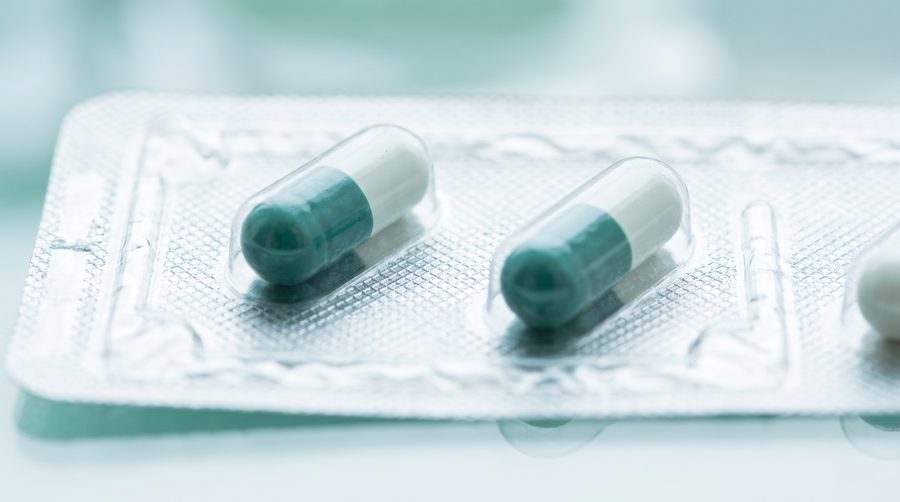
No, and none of the documents we read says it does. A blister is a way of sealing each dose; the status of the product follows from its composition, from what is said about it and from how it is presented. The same tablet is a supplement or a medicine according to those three things, in a bottle or in a blister.
The rule of thumb is short: change the pack and you change nothing in the classification; change the claim on the pack and you may change everything. That is why the carton matters in this article, even though the blister does not.
What does the SFDA look at when a product sits on the border?
Three things: what the product is for and what is claimed for it, what is in it and at what level, and what form it takes. The SFDA's Guidance for Borderline Products Classification, version 3.0, sets these out for products that could be read either as food or as medicine.
- Purpose and claims. The statements on the label, the website and the advertising count, not only the label.
- Composition and levels. Vitamins and minerals above the upper limit of the total daily allowance point to a medicine.
- Form. The guidance says the product format is not always the sole criterion and should be reviewed case by case. A tablet or capsule is therefore not an automatic medicine, and a powder is not automatically a food.
The word blister does not appear in the guidance. We ran a text search of the 29 pages on 14 October 2026 and found no match. The guidance does not mention blisters; it mentions packaging only in passing, in the definition of a supplement.
For a doubtful product, the guidance gives an address for classification requests: pcs@sfda.gov.sa. Sending the request before the shipment is cheaper than learning the answer at the port.
How does EU law separate a supplement from a medicine?
By definition, and the definitions overlap on purpose. Directive 2002/46/EC defines a food supplement as a foodstuff that supplements the normal diet, is a concentrated source of nutrients or other substances, and is marketed in dose form. The directive lists capsules, pastilles, tablets, pills and similar forms, sachets of powder, ampoules of liquid and drop-dispensing bottles. A tablet is a recognised dose form for a supplement; it is not, by itself, a sign of a medicine.
Directive 2001/83/EC defines a medicinal product in two ways: by how it is presented, as having properties for treating or preventing disease, and by function, when it can be used in or given to people to restore, correct or modify physiological functions through a pharmacological, immunological or metabolic action. A product that meets either limb is a medicinal product.
Two further rules bind the two directives together.
- Doubt goes to the medicines directive. Article 2(2) of the medicines directive, as replaced by Directive 2004/27/EC, says that where a product, taking all its characteristics into account, could fall under the medicinal product definition and under another Community category, the medicines directive applies.
- A supplement may not claim to treat. Article 6(2) of the supplements directive forbids labelling, presentation and advertising that attribute to a supplement the property of preventing, treating or curing a human disease, or that refer to such properties.
The first rule is the cost of a bold claim: one sentence on a carton can move a product from one directive to the other. The second is the reason the carton text for a supplement stays plain.
What do Egypt and Lebanon look at?
Egypt looks at a defined category with its own authority and channel; Lebanon, in what we read, regulates the label and the advertising. Neither text we read turns on whether the dose sits in a blister.
Egypt. Decision 572/2022 of the Egyptian Drug Authority, two pages, concerns the category the decree defines: registered only with the EDA and circulating only in licensed pharmaceutical establishments. Whether a given supplement falls in that category is for your importer to confirm with the EDA. We do not quote the decree's definition of the category here. See supplement blisters for Egypt and the Maghreb.
Lebanon. The Ministry of Public Health has a decision banning advertising of food supplements on audio-visual and social media, amending decisions 2207/1 of 18 December 2014 and 376/1 of 12 March 2019. The ministry's site also carries a list of food supplements it permits; we did not open that list. For carton work the practical point is the licence number and date that Lebanon asks for on the label. See the UAE, Saudi Arabia and Lebanon.
Why does the pack still matter if it does not decide the status?
Because the pack is where the claims are printed. Under the SFDA's factors and under Article 6(2) in the EU, the text on a carton is part of the evidence about what the product is. A blister adds two surfaces: a carton that holds 1 to 4 blisters, and a lidding foil that can be printed for your brand. Whatever is printed on them is read as a statement about the product.
Our rule is therefore the same for a bottle and a blister: the label and carton are laid out to the rules of the country of sale, which your importer confirms, or printed from your own artwork. We do not write treatment or prevention statements on a pack. The practical guide to artwork is in the blister artwork guide.
The pack also matters in a second way that has nothing to do with status: each dose sealed on its own, a tamper-evident seal and dose-by-dose use are what a blister gives. For the comparison with a bottle, see blister or bottle.
What does your situation decide?
Each line shows what the choice costs you in time, in sales channel or in risk.
| Your situation | What it decides | What it costs you |
|---|---|---|
| Product sold as a food supplement, plain label | Keep every statement on carton, foil and website free of treatment or prevention claims, and keep vitamins and minerals below the upper limit of the total daily allowance | Wording: you cannot say what a medicine would say. Dose: you cannot reach the stronger levels on the food route |
| Product near the border (strong dose, or a claim you want to keep) | Ask the SFDA for a classification before you ship, through the address in its guidance | Time before the first order: the request and the answer come first. Risk: the answer may be that it is a medicine |
| Product the authority treats as a medicine or health product | A different procedure and a different GMP standard from the food route | Time and a change of supplier set-up: the plant's GMP is for food supplements, not pharmaceutical GMP |
| Egypt, a product that falls in the EDA category | EDA registration, and circulation only in licensed pharmaceutical establishments | Channel: that product reaches the market only through those establishments. Time: the EDA file comes before the first shipment |
| Lebanon | Licence number and date on the label; no advertising on audio-visual and social media | Marketing: those channels are closed to supplements. Artwork: room for the number on the carton |
| Choosing blister over bottle because you think it protects the status | Nothing: the pack does not change the classification | A blister run for your brand starts from 2,000 cartons, at least 4,000 blisters, with production in 6 to 10 weeks. Choose it for the dose format, not for the status |
What do we supply, and what do we not do?
We manufacture food supplements for your brand and seal tablets, capsules and softgels in blisters, in a carton printed for your market. We do not file registrations and we do not classify products; the importer or brand owner takes that step with the authority.
What we supply is the paper that the file draws on: a Certificate of Analysis and a specification with each batch, and copies of the plant's certificates with their numbers on request. The plant is ISO 22000, GMP and HACCP certified, and registered with the US FDA as a food facility; the GMP is for food supplements. Tablets and capsules are sealed on an Uhlmann B 1240 and cartoned on an IMA IC 150. Details of the process are on the packing page and in quality and batch documents.
Questions buyers ask about supplements, medicines and blisters
Is a blister pack a medicine?
No. A blister is a pack, and no document we read treats the pack as the test. The SFDA's borderline guidance, version 3.0, does not contain the word blister, and EU law defines the two categories by presentation, function and dose form, not by packaging.
What is the difference between a food supplement and a medicine?
Mainly what is claimed, what is in it and at what level. The SFDA looks at purpose and claims, composition and format. EU law asks how the product is presented and what it is used for in the body. A supplement may not be presented as preventing or treating disease.
Does a tablet or capsule count as a medicine?
Not by form alone. Directive 2002/46/EC names capsules, tablets and pills among the dose forms of a food supplement, and the SFDA guidance says the product format is not always the sole criterion and is reviewed case by case.
What does the SFDA look at when it classifies a borderline product?
Three factors: purpose and claims on the label, website and advertising; composition, where vitamins and minerals above the upper limit of the total daily allowance point to a medicine; and the form of the product. Requests for classification go to pcs@sfda.gov.sa.
What happens in the EU if a product could be either?
The medicines directive applies. Article 2(2) of Directive 2001/83/EC, as replaced by Directive 2004/27/EC, says that where a product could fall under the medicinal product definition and under another Community category, taking all its characteristics into account, the medicines rules apply.
Can a supplement carton say that the product treats or prevents a disease?
No. Article 6(2) of Directive 2002/46/EC forbids labelling, presentation and advertising that attribute to a supplement the property of preventing, treating or curing a human disease, or refer to such properties. We do not print such statements on cartons or foil.
Does Egypt treat a supplement in a blister differently from one in a bottle?
The EDA decision 572/2022 we read concerns a category registered only with the EDA and circulating only in licensed pharmaceutical establishments. It does not turn on blister or bottle in the text we read. Your importer confirms whether your supplement falls in that category.
What does Lebanon ask for on a supplement label?
The Ministry of Public Health asks for its licence number and date on the label, and bans advertising of food supplements on audio-visual and social media, under decisions 2207/1 and 376/1 as amended. Your importer confirms that the rules are in force and what else is required.
Do you register the product or classify it for me?
No. Registration and classification are the brand owner's and the importer's steps. We supply a Certificate of Analysis and a specification with each batch, and a carton and label laid out to the label rules of your market, which your importer confirms.
Is your plant certified to pharmaceutical GMP?
No. The plant is ISO 22000, GMP and HACCP certified, with GMP for food supplements, not pharmaceutical GMP. Where an authority asks for pharmaceutical GMP for a dosage form, whether and how a file can meet it is for your importer to settle.
Read more
Blister or bottle · Blister packing · The UAE, Saudi Arabia and Lebanon · Egypt and the Maghreb · Quality and batch documents
Ask about your product and your market
Tell us the product, the dosage form, the countries you sell in and what your importer has already asked for. We answer within 24 hours, Monday to Friday.
For tablets and capsules in a blister, a run starts from 2,000 cartons printed for your brand, at least 4,000 blisters, with a ready-made formula or your own, and production takes 6 to 10 weeks. Each carton holds 1 to 4 blisters, and the lidding foil carries your brand too.
Request a quote → Email sales@hyperpharm.eu
Sources
- Saudi Food and Drug Authority: Guidance for Borderline Products Classification, version 3.0 (8 November 2023, per the version table in the document), 29 pages. Three factors (purpose and claims; composition; format); format reviewed case by case; classification requests to pcs@sfda.gov.sa. sfda.gov.sa. Checked 14 October 2026.
- European Parliament and Council: Directive 2002/46/EC on food supplements, Article 2(a) (definition, dose forms) and Article 6(2) (no disease claims). publications.europa.eu. Checked 14 October 2026.
- European Parliament and Council: Directive 2001/83/EC on medicinal products for human use, Article 1(2) (definition of a medicinal product). eur-lex.europa.eu. Checked 14 October 2026.
- European Parliament and Council: Directive 2004/27/EC amending Directive 2001/83/EC, which replaced Article 2 of the latter, including paragraph 2 (cases of doubt). publications.europa.eu. Checked 14 October 2026.
- Egyptian Drug Authority: Decision 572/2022, two pages (the category the decree defines; registration only with the EDA; circulation only in licensed pharmaceutical establishments). edaegypt.gov.eg. Checked 14 October 2026.
- Ministry of Public Health, Lebanon: Decision of the Minister of Public Health: Banning of any Food Supplement Advertisement in the Mass Media, amending decisions 2207/1 of 18 December 2014 and 376/1 of 12 March 2019. The page also links a list of supplements permitted by the ministry, which we did not open. moph.gov.lb. Checked 14 October 2026.